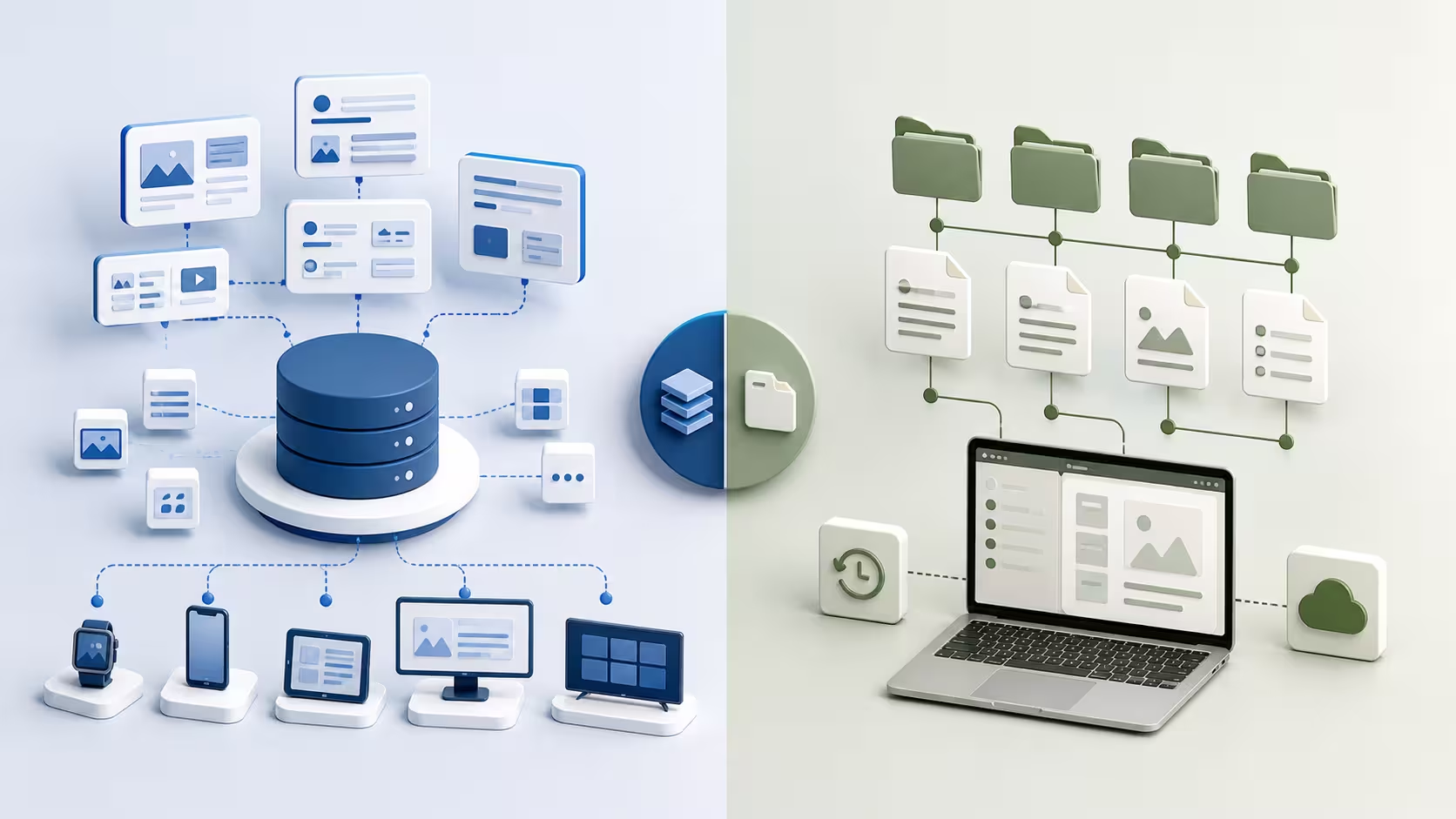
How to Design a Digital Platform for an NGO or Institution
Insights/ Web Architecture & Platforms / Platform Design
23 Jul 2024 - 08 min read
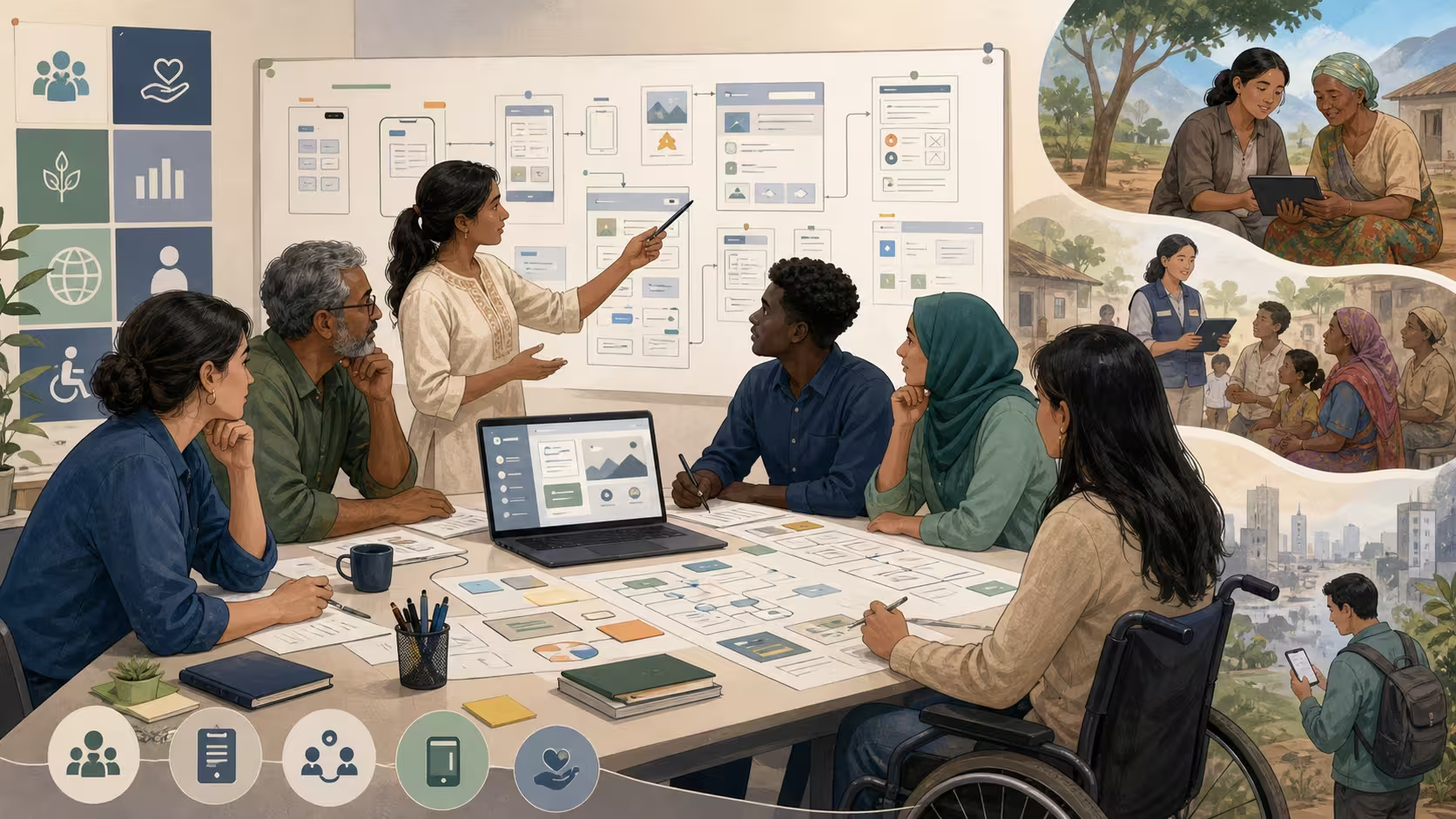
What an institutional platform actually has to do
An NGO or institutional platform is rarely judged on what it looks like at launch. It is judged on whether, two years later, the M&E officer can pull a clean indicator report without copying figures into a spreadsheet, whether the new programme manager can publish a country update without calling the developer, and whether the donor can find the document they were promised in the report addendum. Almost every meaningful design decision flows from those small, late questions, not from the homepage.
Treating the platform as a website with extra forms is the usual mistake. An institutional platform is closer to an information system with a public face: it carries beneficiary records, donor reporting flows, M&E feedback loops, multilingual editorial content, and field workflows that need to keep working when connectivity is intermittent. The website is the most visible surface, but it is the least load-bearing one. The architecture has to be designed against the harder surfaces first.
This article picks up where the emerging-contexts article sets the planning constraints, and where the regional NGO article covers what those constraints look like in francophone Africa specifically. The angle here is narrower: the platform-design choices, not the regional or programmatic ones.
Beneficiary data is the constraint that shapes everything else
The data model usually decides the lifespan of the platform, more than the framework or the hosting. For institutional work, the part of the model that matters most is the beneficiary or participant record: who is in the programme, what they have received, what stage they are at, what consent they gave, and how long the organisation is allowed to keep that record after the engagement ends. Get this wrong, and the platform either becomes legally fragile within a year or becomes operationally unusable when staff start working around the data model in shadow spreadsheets.
A few decisions, made early, do most of the work. Treat beneficiary records as a first-class entity with its own permissions model, not as a content type next to "blog post". Separate identifying fields from programmatic fields so reports can be generated from anonymised data without hand-cleaning every export. Model consent as something that can be revoked and that automatically gates downstream visibility, not as a checkbox that a staff member can ignore in practice. None of this is glamorous; all of it is decisive when the auditor or the donor compliance officer arrives.
Donor reporting is a workflow, not a PDF
Most platforms treat donor reporting as a download: a static PDF generated quarterly, attached to an email. The work to produce that PDF is invisible, manual, and often reproduces numbers that already live in three other places in the system. The reporting is the workflow that consumes the most staff time and produces the least durable artefact, in inverse proportion to its visibility.
A platform designed against this reality lets the relevant figures live in one place, with traceable inputs, and produces the reports as a structured query against that single source. The PDF becomes a render, not a re-keyed document. Where reports require commentary or framing, the platform should let the programme team author the commentary alongside the data, not in a separate Word document attached as an annex. The simplest test of whether this is working is whether a quarterly report can be produced in under a day by the team that ran the programme, without involving a developer.
M&E feedback loops belong inside the platform, not next to it
Monitoring and evaluation usually arrives late in platform design, often as an afterthought once the donor template is published. The result is an M&E system that lives in a parallel toolchain (KoBo, Airtable, an Excel master file) and a platform that has no native awareness of the indicators its own activities are supposed to move. After two cycles, the staff trust the parallel toolchain and treat the platform as a publishing surface, which is the wrong way around.
The pragmatic move is to design the indicator model into the platform from day one. Each programme has a small set of named indicators, each indicator has a definition, a unit, a reporting cadence and an owner, and each activity logged in the platform contributes to those indicators automatically where possible. The platform does not replace specialised survey tools, but it owns the canonical version of every indicator the organisation reports on, and it is the place where the next quarter's plan is written against the current quarter's results. Without that loop closed, the platform stays a brochure with a database attached.
Field workflows over headquarters dashboards
A platform that looks impressive in the headquarters review meeting and is unusable in the field office is the default failure mode. The headquarters team optimises the dashboards they see most often; the field staff who actually generate the data work around the platform because their workflow does not match it. Six months later, the dashboards are accurate at a coarse level and wrong on every detail that matters.
The corrective is to design the field workflows first and let the dashboards emerge from them, not the other way around. That usually means short forms with offline tolerance, a clear sequence of steps that matches what the staff member actually does on the day, and aggressive defaults so a field worker does not have to make ten irrelevant choices to log a single activity. The dashboard is downstream of the form; if the form is wrong, the dashboard is decorative.
Editorial governance: who can publish, who can correct
Institutional platforms publish a mix of programmatic content (country updates, project pages, calls for proposals) and operational content (policies, reports, partner directories). Each kind has its own velocity, its own approvals, and its own correction risk. A platform that treats them as the same content type produces predictable problems: programme updates wait two weeks for legal review, policies get edited by anyone who can log in, country pages drift out of date because no one is named as their owner.
A workable governance model fits in one short table per content type: who can draft, who can approve, who can correct after publication, and on what cadence the content is reviewed. The platform should make those rules visible in the editor, not buried in a guidelines document. The cost of building this is small; the cost of not building it is the slow corrosion of trust in the platform's published content over the second and third year.
Multilingual content as a structural choice, not a feature toggle
For most NGO and institutional platforms, multilingual content is not optional, but it is rarely modelled correctly. The common mistake is to treat the second language as a translation layer over the first: an English page with a French translation field, a single slug, and shared metadata. That works until the French version needs a different structure, a different image, or a different publication date, at which point the team starts duplicating pages and the platform's notion of "this content" stops corresponding to anything coherent.
The cleaner model is to treat each language as a parallel piece of content with its own slug, metadata and publishing workflow, linked to its sibling by a shared identifier. The language version is a property of the content, not a property of the URL. This adds modest complexity at design time and prevents most of the drift that multilingual platforms accumulate after the first eighteen months. For francophone-African contexts especially, French should usually be designed as the primary language and English as the parallel one, not the inverse.
Designing for sustainability past the launch
The single most useful question to ask during platform design is "who maintains this in three years, and on what budget". If the answer is unclear, the technology stack, the hosting choices, the integration count, the licence list and the documentation depth all need to be sized for that uncertainty. A platform that can be maintained by a competent generalist developer in twenty hours a month will outlast a platform that needs the original architect available on Slack, regardless of how elegant the second one is at launch.
Sustainability is the structural form of the same argument the emerging-contexts article makes about maintenance economics. The wider context, including how those choices play out across institutions and funders in the region, is collected in the Madagascar and Africa digital insights cluster, and the structural side of platform design more generally sits in the web architecture and platforms insights cluster.
Bringing this into practice
A useful institutional platform is shaped by its data model, its donor-reporting workflow, its M&E feedback loops, its field forms and its governance, and only then by its visual design. Most of the work happens before the first line of code is written, and most of the rest happens in the year after the launch event. The platform that survives is the one whose design absorbed those pressures honestly, not the one that hoped to compensate for them with features.
If that is the kind of platform you are designing, or recovering, my digital platforms practice for NGOs and institutions is where this work happens directly. If the question has moved from "we need a website" to "we need a platform that holds beneficiary data, runs donor reporting, and survives the next staff rotation", that is the conversation worth opening.
- Haja Faniry
Related services
Custom Digital Platforms for NGOs & Organisations
Development of digital platforms and data systems for NGOs, research institutions and international organisations.
Web Application Development
Custom web application development for companies, startups and international organisations.
API Development & System Integration
API development and system integration services to connect platforms, automate workflows and enable seamless data exchange between applications.